


IT security consulting by certified experts
Threat-focused, proactive IT security consulting and incident response services.
Overview
Consulting IT security
The number of recorded cyber crimes reached a new high in 2021. This is according to the situation report published in May 2022 of the BKA. The development is an expression of the progressive shift of crime into the digital space. In particular, the increasing interlinking of international supply chains and the further acceleration of digitalization, but also by the Corona pandemic, creates a multitude of new crime opportunities for cyber criminals.
IT security (also IT security) is the protection of information processed in an IT infrastructure. In particular, cyber security is understood to be the protection of the IT environment from threats posed by cybercriminals and hostile state actors. An ISMS (InformationssecurityMmanagementSsystem) is a procedural approach to coordinating and control all information protection measures.
Good reasons to improve IT security
- Protect your know-how and customer data.
- Lower risk from cybercriminals, malware, and phishing
- Compliance with legal and contractual requirements of IT security standards such as TISAX and ISO 27001.
- Creating a competitive advantage
- Develop an appropriate strategy to deal with IT security risks.
- Optimize security incident and vulnerability handling procedures
Other IT security consulting services


DevSecOps and SDLC Consulting
Our security experts will infuse security policies, tooling, and practices into your DevOps environment.

Incident Response
Redlings helps organizations and government agencies in preparing for an incident (incident response readiness), in the event of an incident (incident response service), and in the aftermath (malware analysis, digital forensics).

TISAX®
Redlings supports companies in implementing the VDA/ISA requirements for obtaining the TISAX® label


Ransomware Readiness
Redlings provides organizations with top-notch security experts who have years of experience building and running information security programs.
Your advantages
Customized solutions
Our independent IT security consultancy offers custom-fit solutions for businesses of different sizes and for government agencies.
Certified specialists
With our certified technical experts and audit team leaders, you always have the right contact person.
Risk-oriented and custom-fit solutions
With our technical knowledge, we find custom-fit solutions to improve your IT compliance and IT security.
Do you need reliable experts to help you protect your IT systems ?
Let’s talk about it today!
Closing weak spots in technology and organization
Redlings systematically examines your company’s IT infrastructure and processes for vulnerabilities. With our recommendations, you can better secure your IT, cloud and network systems and thus also optimize the value of investments you have already made.
You will receive recommendations for action regarding organizational vulnerabilities: User and rights management, backup, VPN and remote access, BYOD policies, authentication (2FA, passwordless), encryption, incident management, Vulnerability management, vendor risk management.

Reduce the attack surface
IT systems should be configured to make it as difficult as possible for attackers, detect and bypass protective measures before they take effect. As part of our IT security consulting, you will learn how to effectively harden your servers and clients. Together, we’ll create a plan for what IT security measures you can take to protect your systems from attackers in the long term.

Be prepared
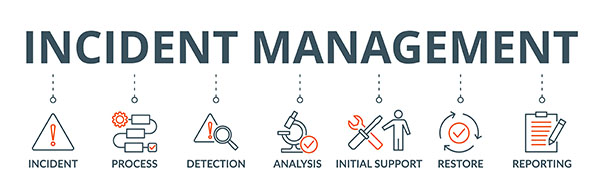
Companies are often overwhelmed when an attack or security incident occurs. With targeted preparation, you can ensure that, should the worst happen. Downtime significantly shortened and your company is quickly again operational again.
Break & bold
Frequently asked questions and answers
The question of the difference between the various terms is often asked. Nevertheless, an exact demarcation and a clear definition of the terms is difficult, since they can be interpreted differently depending on the author and context. The following is nevertheless listed as an orientation guide.
While IT security focuses on the protection of information that is processed in an IT environment, Information security deals with the protection of all information. This includes information that, for example, can be viewed from the outside through the window pane on a monitor or printed confidential documents. IT security is thus a partial aspect of information security.
Data protection is about protecting every citizen from the improper use of his or her personal data. The regulations in this regard can be found in particular in the BDSG and the data protection laws of the federal states.
Data security is primarily concerned with the protection of data, irrespective of the personal reference. Data security is thus conceptually very similar to information security.
Bundles of measures for information security can be found, for example, in the standards of the ISO/IEC 27000 and the VDA/ISA catalog on TISAX. The German Federal Office for Information Security Information Technology (BSI) publishes IT-Grundschutz, an extremely comprehensive overall concept, for selecting and implementing suitable security measures in a risk-oriented manner.
In principle, yes. With an experienced IT security consulting team, this should not be a problem.
It has been noticeable in the past that at many large companies. despite compliance (ISO/IEC 27001 or PCI DSS) a data loss or a ransomware incident a ransomware incident had caused serious damage to the company.
From this, one could conclude that certification according to a standard does does not necessarily lead to a secure IT landscape.
And, yes, you can also achieve certification without having gained very much in security to have gained. That’s the checkbox approach, so to speak.
Because we at Redlings, through our regular deployments as pentesters and defenders, have a deep understanding of the approaches of advanced attackers, we also use this knowledge for IT compliance and certification projects. If you’re going to do IT compliance, do it in a way that truly serves IT security.
How does IT security consulting work?
Whether SME, corporation or government agency – our IT Security Consultants are well acquainted with the threats, vulnerabilities and compliance requirements of different industries and companies. And they get IT security consulting that supports you exactly where you need it.
Determine your requirements
In a discussion with your management and IT, we determine your protection needs and company-specific risks as well as your IT security concept and security goals. Of course, this also involves the relevance of IT compliance requirements such as ISO/IEC 27001, TISAX® or IT-Grundschutz.
Optional IT infrastructure check
We examine your IT infrastructure and interfaces as well as your hardware and software-based protection mechanisms. With our technical expertise as penetration testers we at Redlings go far beyond the IT compliance and checkbox-based approach.
Creating a sound concept
Based on your requirements, our experience and industry expertise, we will develop a well-founded concept for you.
Customized solution
Redlings presents you with the elaborated concept for a sustainable information security management. Together with your feedback, a custom-fit solution is created.
Consultation
In every process phase and also during the further implementation, we are your partnerly advisor on all issues related to your strategic information security.
Break & bold
How do I implement IT security in the enterprise
There are several different disciplines, which are also constantly evolving, that can take a holistic approach to IT security. An excellent overview is provided by the 18 sets of measures in the CIS Critical Security Controls.
01 – Enterprise IT inventory
A company can only protect an IT infrastructure if it knows what it consists of. For this purpose, an inventory of all hardware components used should be available. In particular, this includes all devices connected to the corporate network, such as clients (workstations, laptops, smartphones, and IoT devices) and servers. But it also includes cloud infrastructure.
02 – Inventory of software used
Since software vulnerabilities are a common gateway, a list of currently used software is important to identify potential risks to the deployment. Without such a software inventory, reliable updating and patching is not possible.
The logical step after building such an inventory is application whitelisting. In this process, only approved applications are still executable in the IT environment.
03 – Data security and privacy
Our data is no longer just within our own borders, but on mobile devices such as smartphones or laptops, or in the cloud – and often still shared with partners around the world. Without an understanding of who has access to what data, who can authorize such access, and how data is protected on mobile devices, it is difficult to protect against data loss (“data leak”). Data leakage can be very inconvenient for confidential customer data or trade secrets.
04 – Secure configuration of corporate IT as well as the software used.
Often, newly deployed hardware or software have default passwords and configurations with ease of use in the enterprise in mind rather than security. A comprehensive hardening and of all deployed clients, servers, firewalls should be done after each production deployment.
05 – User management
It is often easiest for an attacker to abuse an existing user account by using weak or phished passwords, active user accounts of people who have already left the company, test accounts, or the like can be used. To counter this, one must have an overview of the accounts currently in use and separate normal users from administrative accounts.
06 – Rights management
Building on 05, the rights used need to be managed. Multi-factor authorization should be used when accessing from remote or if possible when accessing with administrative rights.
Management of users and their access is called IAM (Identity Access Management) – based on this, management of privileged access is called PAM (Privileged Access Management).
07 – Vulnerability management
Swiftly patching security vulnerabilities and applying updates would have already prevented many data leaks. For this, a good look at the operating systems and also software used in the company is important.
08 – Audit Log Management
Log files of system and user events are important to find out – if the worst happens – what happened and which data has been stolen or changed. Also, this log data can be further processed in a SIEM (Security Information and Event Management) to trigger alerts in real time.
09 – Email and browser protection
Using up-to-date and fully supported software for email and browsers should be a given. More extensive protection such as a web proxy or DNS filter often makes sense.
10 – Malware protection
By using automatically updating anti-malware software, some basic protection is achievable. However, not all that glitters is gold here: keeping in mind that modern malware is naturally developed precisely so that the anti-malware software used (regardless of manufacturer…) does not provide its full protective effect is important.
So if malware does run on a system, it’s unpleasant, but often difficult to prevent completely in an organization. So it is even more important at this point that the malware finds itself in a restricted, non-administrative, user account on a fully-patched system in a hardened IT environment with no security holes to minimize the damage that can be done. Backups are also often irreplaceable at this point then to allow work to continue swiftly.
11 – Backups
Automated backups are not optional, they are a must. It is very important to isolate the backups from the running systems so that – for example in the event of an attack by ransomware – the backups are not encrypted or deleted at the same time. Cloud backup services or offline backups such as rolling USB hard drives can be suitable for this purpose.
12 – Network infrastructure management
A well thought-out enterprise network security architecture (zoning/firewalls) can help limit the movement of attackers. Often, for example, it is not necessary for the operational process to be able to access another client from one client – but for the attacker (lateral movement) this is very important.
13 – Network monitoring
For advanced IT security requirements, correlated analysis of audit logs and in a SIEM (security information and event management) coupled with solutions for host intrusion detection (HIDS), network intrusion detection (NIDS), packet filtering and traffic flow information can be useful.
14 – Security Awareness Trainings
Regular awareness training of employees ensures that the “human firewall” is active. Since currently most external attacks are based on social engineering techniques (often initially via phishing or by tapping user passwords), well-trained employees can be the most effective detection system of such attacks.
15 – Service provider management
In our interconnected world, organizations rely on vendors and partners to manage enterprise data and use external IT infrastructure for mission-critical applications. An inventory of the service providers used should be available (e.g., Microsoft if Office365/Exchange Online are used). The use of (cloud) service providers cannot be assessed across the board. The security precautions on the part of the service provider are often much higher than a medium-sized company could ever represent – but this shifts the attack surface in the direction of the company’s own employees.
16 – Security of software and web applications used.
Admittedly, application security is a broad field. The goal is always to ensure that the applications and services being used cannot be hacked, compromised, accessed without authorization or shut down. Depending on whether a company primarily buys and uses software or develops software itself, the focus and the measures implemented to achieve this can also be very different. As a minimum requirement, the handling of 07 vulnerability management should be established. If software is developed in-house, a process for secure software development should be used (SDLC, DevSecOps if applicable).
17 – Incident Response
Every organization should be prepared for security incidents. Clearly defined policies, plans, procedures, responsibilities, training and communications are the foundation to quickly identify and appropriately respond to security incidents.
18 – Penetration testing
A successful defense strategy requires a comprehensive program with effective strategies and governance, strong technical defenses, and appropriate user engagement. However, it is rarely perfect. In a complex IT environment where technology is constantly evolving and new attackers with new modus operandi emerge regularly, organizations should regularly test the measures in place to identify gaps and assess their own resilience.
This testing can be done from the perspective of the external network, the internal network, an application, the server or client. Social engineering and circumvention of physical access controls can also be included.
Talk to us about protecting your IT systems.
certified and experienced
Qualifications and standards







Why Redlings?
A Trusted Partner
- In-depth requirements analysis and consulting
- Years of experience in implementing TISAX® and ISO/IEC 27001 projects with both publicly traded international corporations and SMEs
- A deep understanding of how real attackers work
- We combine IT compliance with real IT security
Your Contact
Have we sparked your interest?
Just give us a call or write us a message!